
Spinal Orthosis
Spinal braces supporting posture, alignment and post-injury stability.
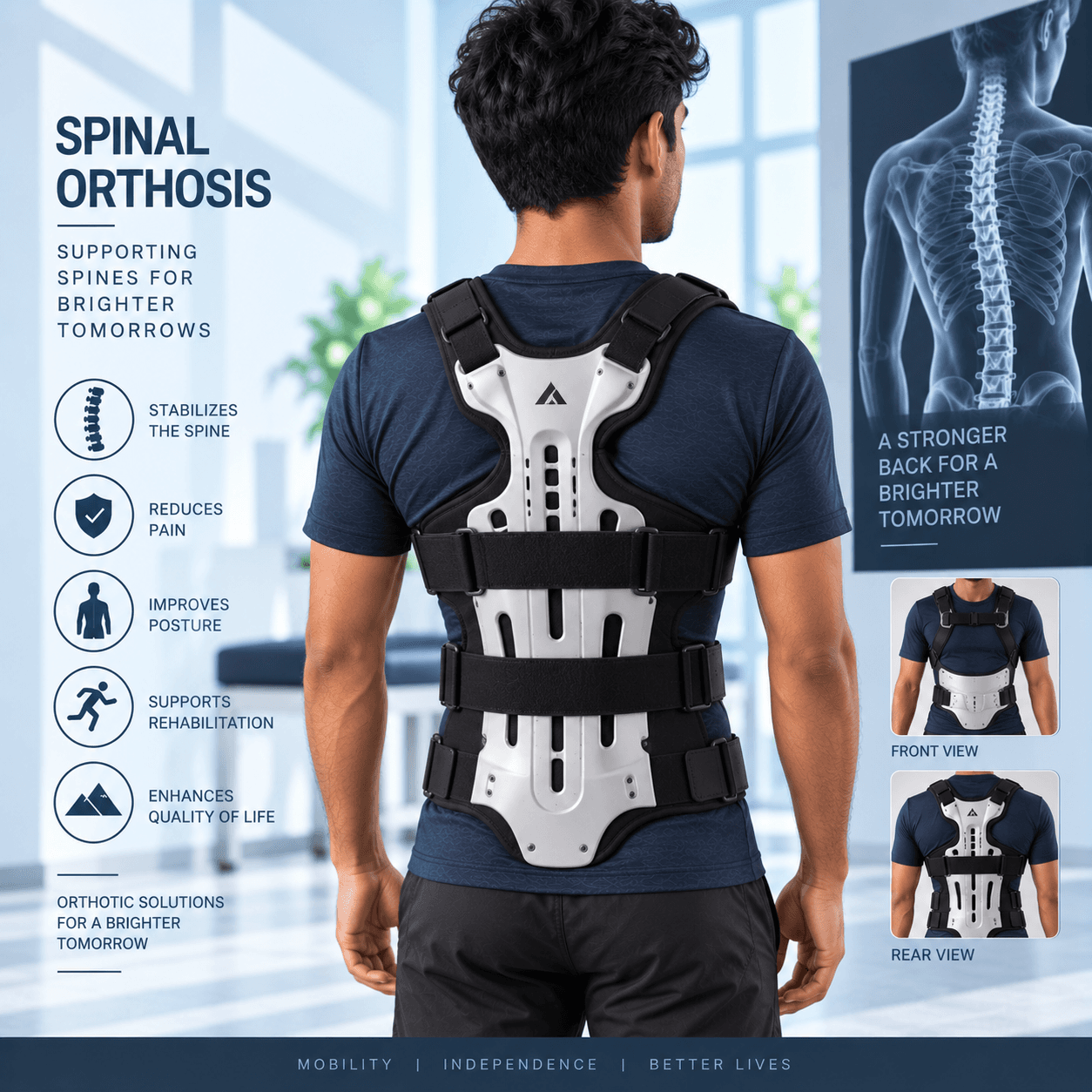
Spinal Orthosis
A spinal orthosis supports the back and trunk, and is used for a range of reasons including post-surgical stabilisation, fracture management, scoliosis or general postural support. These braces vary widely in design, from soft lumbar supports to more rigid, custom-moulded thoracolumbosacral orthoses.
Because the spine plays such a central role in overall posture and movement, spinal orthoses are generally fitted following a specific clinical recommendation, with attention paid to how the brace interacts with sitting, standing, breathing and daily activity.
This solution is often discussed for:
- Post-surgical spinal stabilisation and protection
- Vertebral fracture management
- Scoliosis or other structural spinal alignment concerns
- General postural support recommended by a treating professional
Start with the person's needs, goals, existing situation and practical requirements.
Discuss the appropriate solution category, fitting considerations and customization options.
Fitting, training, adjustments and follow-up can be discussed as part of the individual pathway.
You don't need to know the product name first.
The specific clinical reason for spinal support
Rigid versus soft/semi-rigid design based on the level of control needed
Comfort during sitting, standing and daily movement
How the brace fits under or over clothing
A structured wear schedule and follow-up plan as advised by the treating team
Common questions about spinal orthosis.
Wear schedules are set individually by the treating professional based on the underlying condition, and should be followed as recommended rather than adjusted independently.
Some restriction of movement is often intentional, particularly for post-surgical or fracture support, and is discussed as part of the overall treatment plan.
Have a question about Spinal Orthosis?
Send AXION your requirements and the team can guide you toward the next step.