
Hip Disarticulation Prosthesis
For amputation at the hip, replacing hip, knee and lower-leg function.
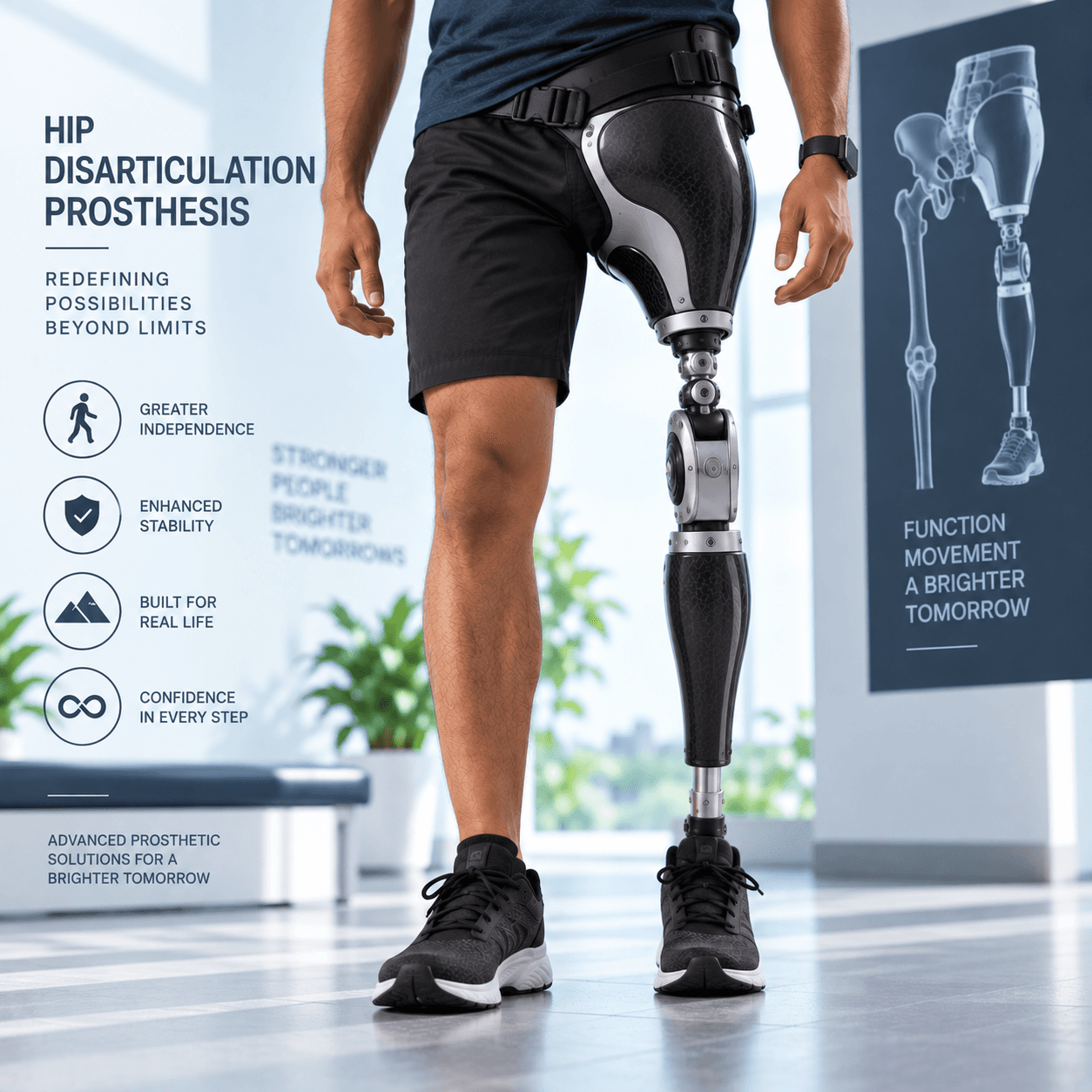
Hip Disarticulation Prosthesis
A hip disarticulation prosthesis is fitted when amputation removes the entire leg at the hip joint, with no femur remaining. This level requires the prosthesis to replace hip, knee and ankle-foot function together, supported by a socket that wraps around the pelvis for stability rather than a traditional thigh socket.
Because there is no natural hip joint to work from, walking with a hip disarticulation prosthesis relies heavily on trunk movement and training, with component selection focused on providing a stable, safe base for standing and walking.
This solution is often discussed for:
- Amputation at the hip joint with no femur remaining
- A need for a pelvic-socket prosthesis rather than a thigh-based one
- Interest in a stable, safety-focused walking setup
- A desire to discuss realistic activity goals at this level
Start with the person's needs, goals, existing situation and practical requirements.
Discuss the appropriate solution category, fitting considerations and customization options.
Fitting, training, adjustments and follow-up can be discussed as part of the individual pathway.
You don't need to know the product name first.
Pelvic socket comfort and stability during sitting, standing and walking
Hip, knee and ankle component selection for a coordinated gait
Trunk control and balance training given the absence of a natural hip
Overall prosthesis weight relative to comfortable, sustained use
Realistic, individually discussed goals for mobility and endurance
Common questions about hip disarticulation prosthesis.
Many people achieve functional walking with appropriate components and structured rehabilitation, though the gait pattern and energy demands differ from lower amputation levels. Individual goals and outcomes are discussed as part of the assessment and training process.
A pelvic socket, shaped to fit around the hip and pelvis, replaces the usual thigh socket and anchors the prosthetic hip, knee and foot components.
Have a question about Hip Disarticulation Prosthesis?
Send AXION your requirements and the team can guide you toward the next step.