
Knee Disarticulation Prosthesis
For amputation through the knee joint, preserving full femoral length.
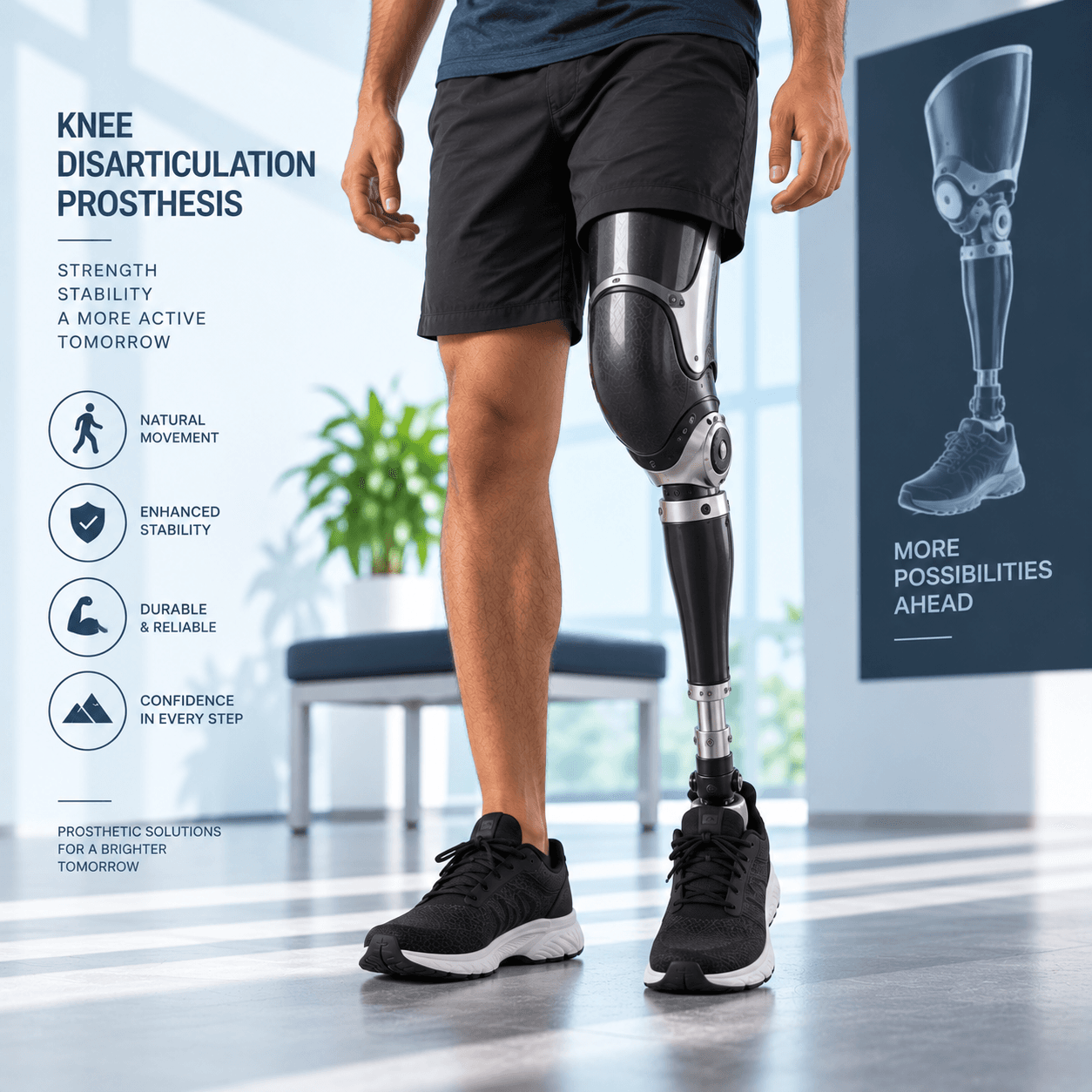
Knee Disarticulation Prosthesis
A knee disarticulation prosthesis is used when amputation passes through the knee joint, leaving the full thigh bone intact. This preserves strong end-weight-bearing capacity and a longer lever arm than an above-knee amputation, which can support better balance and rotational control of the prosthetic leg.
Because there is no natural knee, a prosthetic knee joint is still required, but the longer residual limb often allows for a more stable socket fit and improved proprioceptive control compared with a higher transfemoral level.
This solution is often discussed for:
- Amputation directly through the knee joint
- A residual limb with the full thigh length preserved
- A desire for strong end-weight-bearing and rotational control
- Interest in comparing mechanical, hydraulic or microprocessor prosthetic knees
Start with the person's needs, goals, existing situation and practical requirements.
Discuss the appropriate solution category, fitting considerations and customization options.
Fitting, training, adjustments and follow-up can be discussed as part of the individual pathway.
You don't need to know the product name first.
Socket design given the broader distal thigh shape at this level
Prosthetic knee joint selection suited to activity level and terrain
Matching overall prosthetic leg length to the sound side
End-weight-bearing comfort and tissue tolerance
Balance and control training given the longer residual lever arm
Common questions about knee disarticulation prosthesis.
Many people find the longer residual limb offers better leverage and proprioceptive feedback, which can support gait control, though outcomes vary individually and depend on overall strength and rehabilitation.
Options range from simple mechanical knees to hydraulic or microprocessor-controlled knees that adjust automatically to walking speed and terrain. Selection depends on activity level, goals and, in many cases, funding considerations.
Have a question about Knee Disarticulation Prosthesis?
Send AXION your requirements and the team can guide you toward the next step.