
Shoulder Disarticulation Prosthesis
For amputation at the shoulder, requiring a full replacement of arm function.
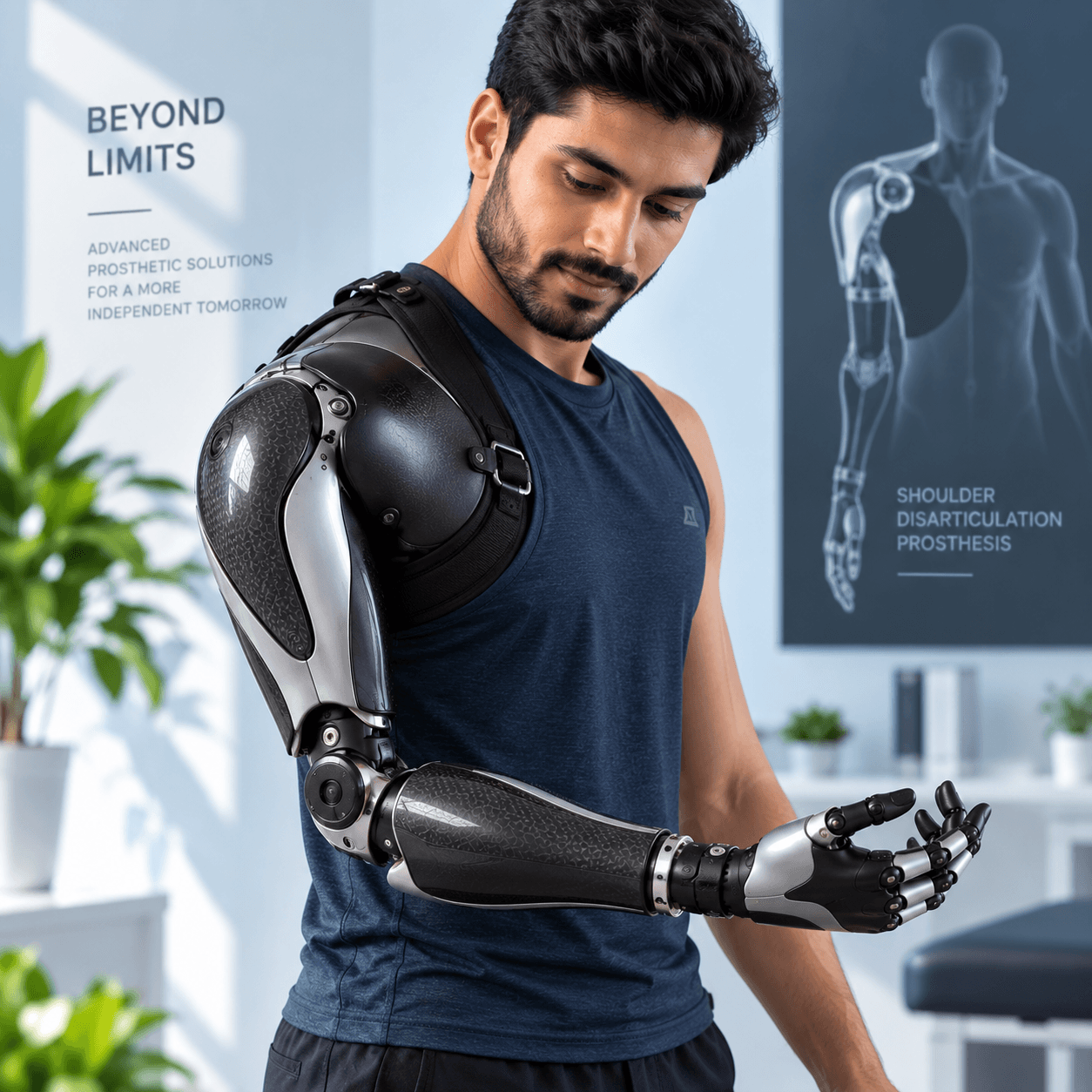
Shoulder Disarticulation Prosthesis
A shoulder disarticulation prosthesis is fitted when the entire arm has been removed at the shoulder joint, with no upper arm bone remaining. This is one of the more complex upper-limb prosthetic levels, since the device needs to replace shoulder, elbow, wrist and hand function without any natural joint to build on.
Solutions at this level typically rely on a supportive shoulder-cap or chest-wall socket, and may combine passive positioning joints with body-powered or externally powered components, prioritised according to which functions matter most for the individual's daily activities.
This solution is often discussed for:
- Amputation at the shoulder joint with no remaining upper arm
- A need for a socket that anchors around the shoulder and chest wall
- Interest in prioritising specific functions (reach, grip, positioning) rather than full replication
- Consideration of lighter passive designs versus heavier powered systems
Start with the person's needs, goals, existing situation and practical requirements.
Discuss the appropriate solution category, fitting considerations and customization options.
Fitting, training, adjustments and follow-up can be discussed as part of the individual pathway.
You don't need to know the product name first.
Chest-wall and shoulder-cap socket comfort and stability
Which functions to prioritise, since replicating full arm movement is rarely realistic
Overall prosthesis weight relative to the wearer's tolerance and activity level
Cosmetic versus functional priorities for this level of restoration
A structured, gradual training plan given the complexity of control
Common questions about shoulder disarticulation prosthesis.
Not entirely — at this level, most solutions prioritise specific useful functions (such as stabilising an object, or positioning a hand) rather than replicating the full range of natural arm movement. Goals are discussed individually to set realistic expectations.
It can be, since it replaces the most joints of any upper-limb level. Component choice, and sometimes a lighter passive design, can help balance function against comfortable, sustainable wear.
Have a question about Shoulder Disarticulation Prosthesis?
Send AXION your requirements and the team can guide you toward the next step.