
Above-Knee (Transfemoral) Prosthesis
Above-knee prosthetics replacing both knee and lower-leg function.
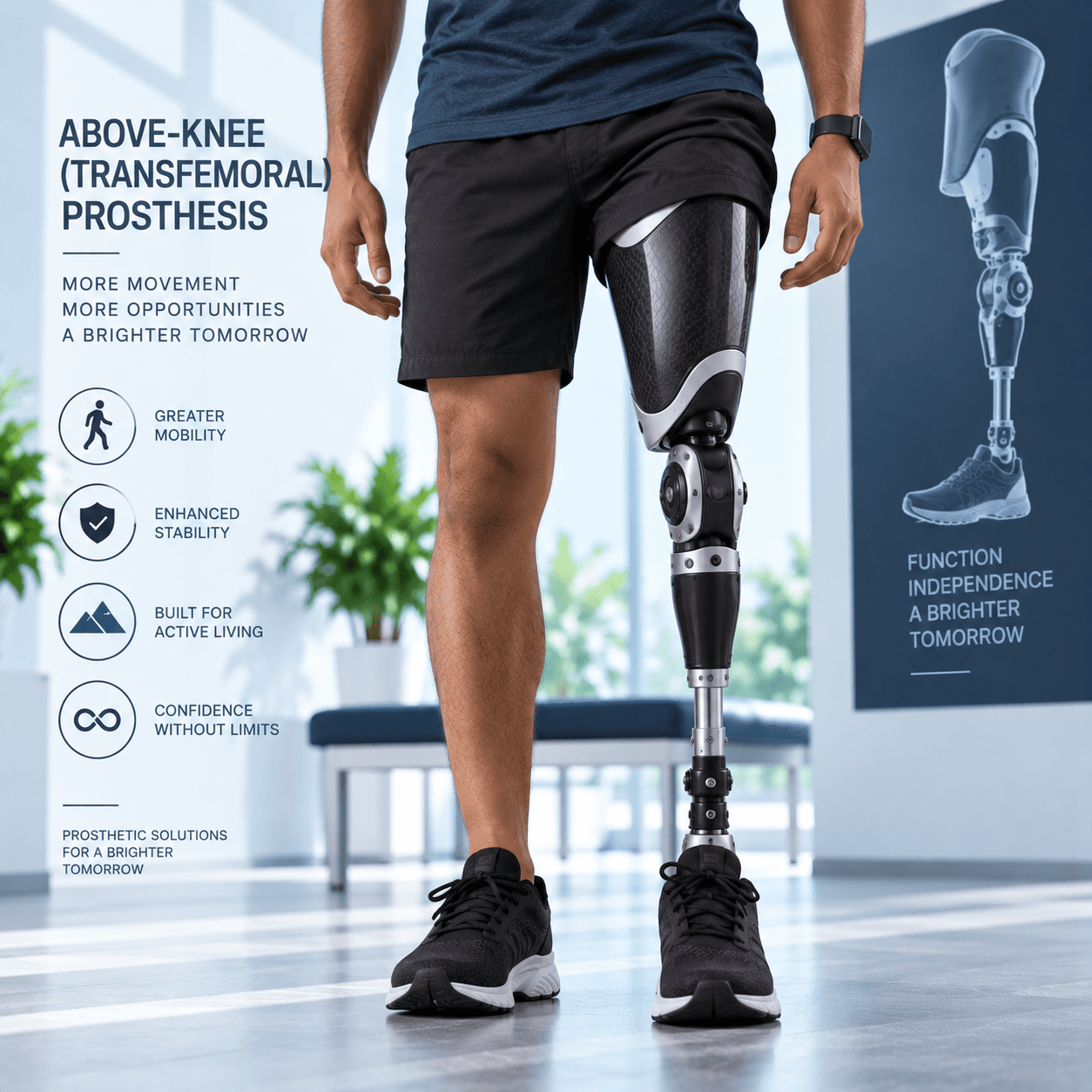
Above-Knee (Transfemoral) Prosthesis
A transfemoral, or above-knee, prosthesis is required when amputation occurs above the knee, meaning the device must replace both knee function and the lower leg and foot. This is a common and well-established prosthetic level, supported by a wide range of prosthetic knee technologies suited to different activity levels.
Socket fit is particularly important here, since the socket needs to transfer body weight effectively through the residual thigh during standing, walking and more demanding activities, while the prosthetic knee and foot are selected to match stability, terrain and lifestyle needs.
This solution is often discussed for:
- Amputation above the knee joint
- A need to replace both knee and lower-leg/foot function
- A desire to compare mechanical, hydraulic or microprocessor knee options
- A residual limb suited to suction, pin-lock or vacuum suspension
Start with the person's needs, goals, existing situation and practical requirements.
Discuss the appropriate solution category, fitting considerations and customization options.
Fitting, training, adjustments and follow-up can be discussed as part of the individual pathway.
You don't need to know the product name first.
Residual thigh length, strength and muscle control
Prosthetic knee type — mechanical, hydraulic or microprocessor-controlled
Socket suspension method for security during dynamic movement
Balance, stability and fall-prevention during early training
A gradual, structured gait training and follow-up programme
Common questions about above-knee (transfemoral) prosthesis.
A mechanical knee relies on fixed friction or hydraulic resistance set for general use, while a microprocessor knee uses sensors to adjust resistance in real time to walking speed and terrain, which can improve stability. Suitability is assessed based on activity level, safety needs and other individual factors.
Generally, yes — replacing the knee joint adds complexity to balance and energy use during walking, which is why structured gait training and appropriate component selection are especially important at this level.
Have a question about Above-Knee (Transfemoral) Prosthesis?
Send AXION your requirements and the team can guide you toward the next step.