Below-Elbow (Transradial) Prosthesis
Below-elbow prosthetics for a functioning elbow with forearm loss.
Below-Elbow (Transradial) Prosthesis
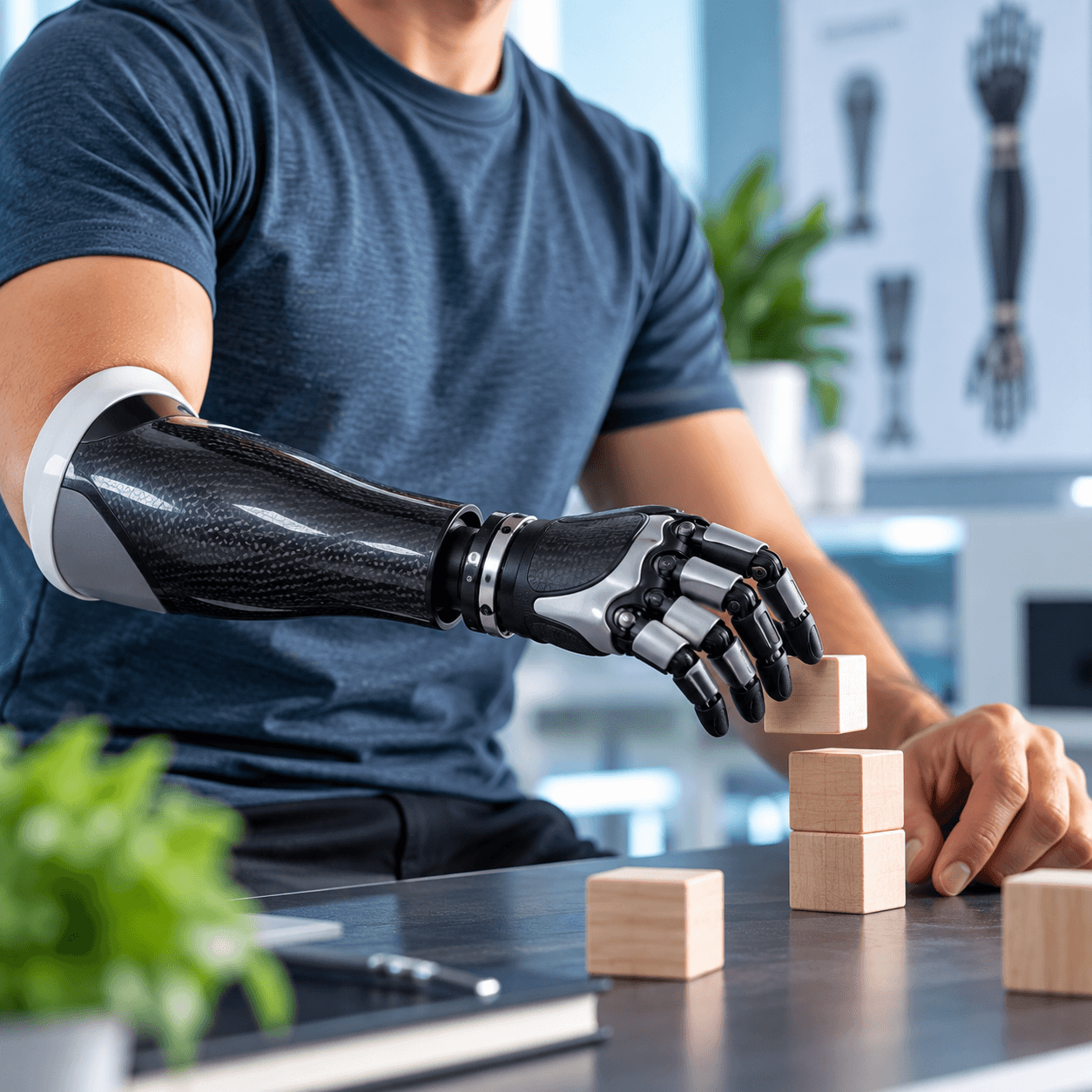
A transradial, or below-elbow, prosthesis is fitted following amputation between the wrist and elbow, with the elbow joint itself preserved. Keeping a working elbow generally allows for a wide functional range, since the wearer retains natural control over reaching, lifting and positioning.
This is one of the more common upper-limb prosthetic levels, and it supports a broad range of solutions — from body-powered hook or hand systems controlled by a harness, to myoelectric hands that respond to residual muscle signals, chosen according to residual limb length, strength and lifestyle.
This solution is often discussed for:
- Amputation between the wrist and elbow with the elbow preserved
- A desire for a functional terminal device for work or daily tasks
- Interest in comparing body-powered versus myoelectric control
- A residual limb suitable for socket suspension via harness or suction
Start with the person's needs, goals, existing situation and practical requirements.
Discuss the appropriate solution category, fitting considerations and customization options.
Fitting, training, adjustments and follow-up can be discussed as part of the individual pathway.
You don't need to know the product name first.
Residual forearm length and muscle strength available for control
Preferred control method — cable/harness, myoelectric, or a hybrid
Socket suspension type and comfort over a full day of wear
Terminal device options suited to specific tasks or occupation
Skin care and residual limb volume changes over time
Common questions about below-elbow (transradial) prosthesis.
Body-powered systems are operated through a harness and cable connected to shoulder or body movement, offering tactile feedback and durability. Myoelectric systems use sensors on the skin to detect muscle signals and can offer a more natural-looking grip. Suitability depends on residual limb condition, lifestyle and personal preference.
This varies by individual and device type, and is usually addressed through structured functional training during rehabilitation rather than a fixed timeline.
Have a question about Below-Elbow (Transradial) Prosthesis?
Send AXION your requirements and the team can guide you toward the next step.